
Capture-decran-2025-12-15-120410.png

15 December 20250

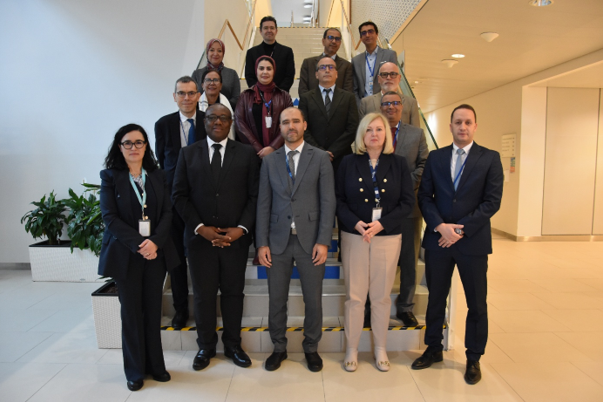
The Moroccan Agency for Nuclear and Radiological Safety and Security (AMSSNuR), represented by its Secretary General, Mr. Reda Nour, accompanied by the Head of the Division for Regulation and Authorization of Reactors and Associated Facilities, took part, as a member of the national committee tasked with reflecting on the prerequisite conditions for the “Clean Package” project, in the coordination meeting dedicated to the review of the Integrated Work Plan (IWP) related to the feasibility study of the “Clean Package” project based on the use of Small Modular Reactors (SMRs).

Held in Vienna from 9 to 11 December 2025, the meeting aimed to present the progress achieved to date, identify priority needs, and define areas of cooperation with the International Atomic Energy Agency (IAEA) for the next three years.

On this occasion, it was recalled that the “Clean Package” project, proposed by the Ministry of Energy Transition and Sustainable Development, forms part of a strategic approach intended to provide a sustainable solution to the challenge of seawater desalination, relying on an energy mix that combines renewable energy sources with the deployment of Small Modular Reactors (SMRs). The project had previously been the subject of technical discussions with IAEA experts in July 2025.

Furthermore, AMSSNuR plays a key role in 11 out of the 19 thematic areas that constitute the national infrastructure required for the development of a nuclear power programme. These areas notably include nuclear safety policy and radioactive waste management, the legislative and regulatory framework, nuclear safety, radiation protection, preparedness and response to nuclear or radiological emergencies, nuclear security, and safeguards.

Finally, it was emphasized that all the themes addressed and the associated actions are fully aligned with AMSSNuR’s Strategic Orientations for the 2022–2026 period, reaffirming the Agency’s commitment to ensuring the controlled, safe and secure development of nuclear applications in support of sustainable development.
EPR-1280x853.jpg

19 September 2025

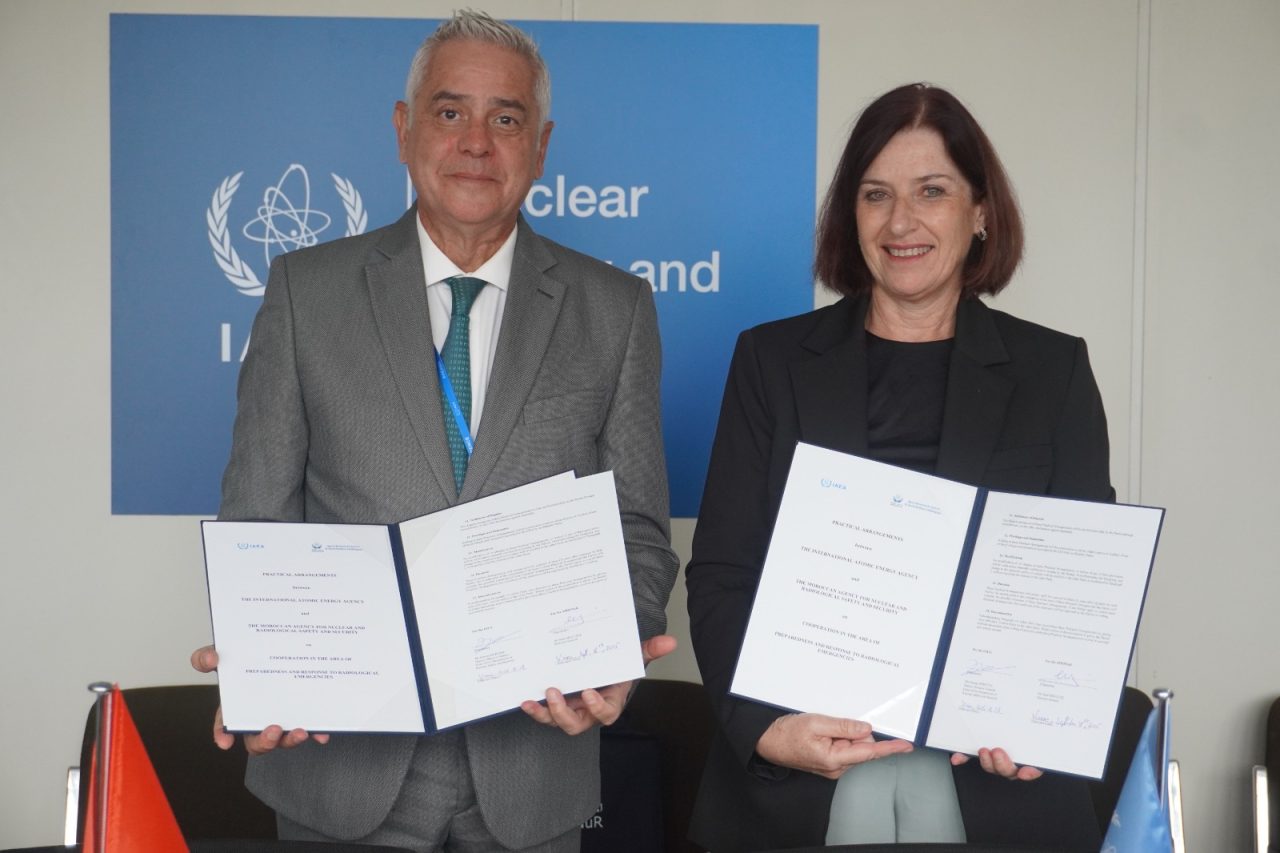
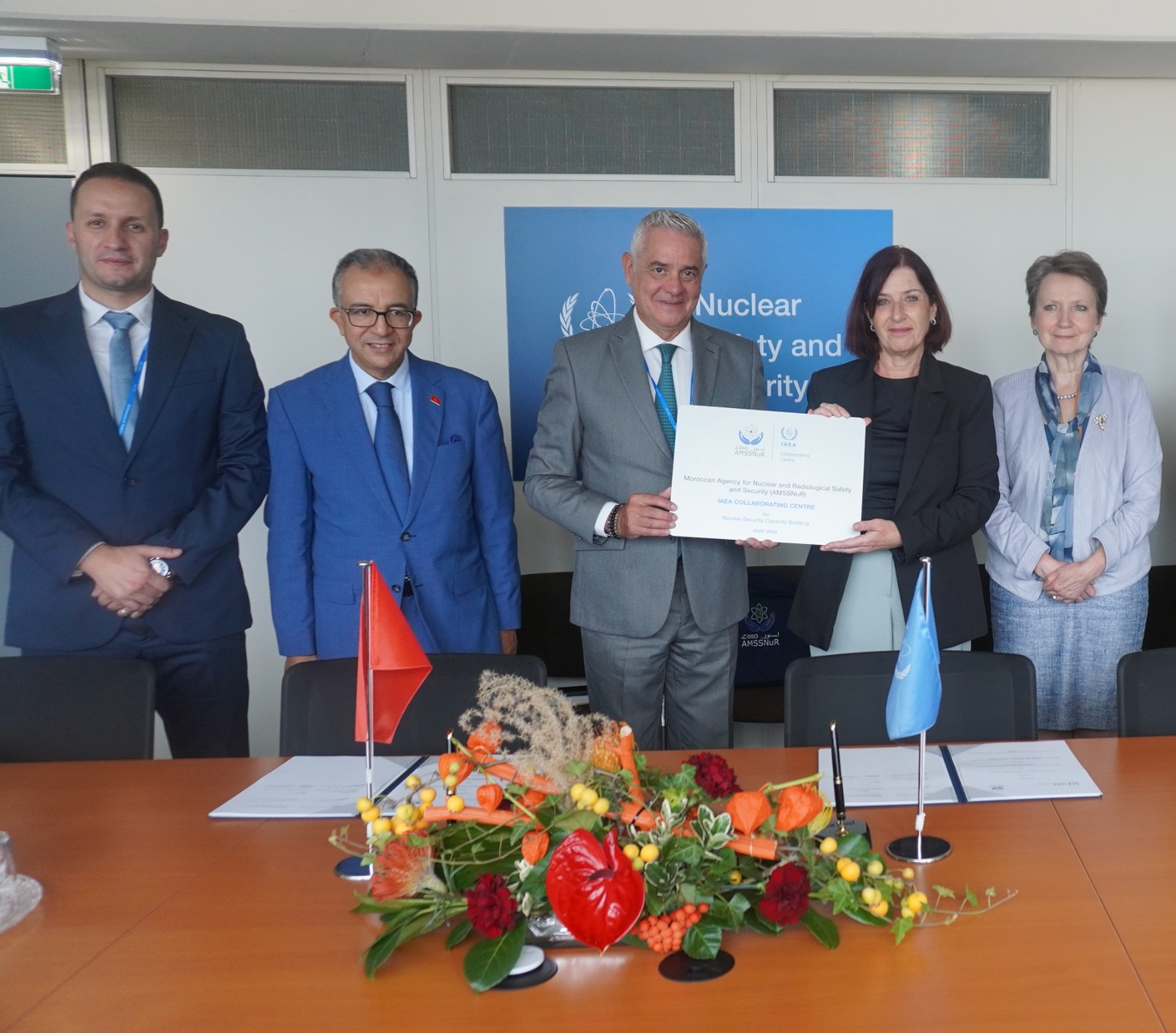
Vienna, September 2025 – On the sidelines of the 69th General Conference of the International Atomic Energy Agency (IAEA), the Moroccan Agency for Nuclear and Radiological Safety and Security (AMSSNuR) took a major new step in its commitment to nuclear safety and security. Two landmark milestones underscored this progress: the renewal of its Practical Arrangements with the IAEA on emergency preparedness and response, and the extension of its designation as an IAEA Collaborating Centre in the field of nuclear security capacity building.

Established in Rabat in 2019, AMSSNuR’s Emergency Preparedness and Response Capacity Building Centre has rapidly become a key player in Africa and beyond. Supported by a robust network of national partners – including the Mohammed V Military Hospital, the General Directorate of Civil Protection, the Ministry of Health through the National Centre for Radiological Protection, and CNESTEN – the Centre has launched multi-year training programs, hosted major international exercises such as the IAEA ConvEx drills, and welcomed the Regional School for Radiological Emergency Management in both English and French editions. The renewal of the Practical Arrangements will further strengthen training, expertise sharing, and international cooperation in this critical area.

At the same time, AMSSNuR has been redesignated as an IAEA Collaborating Centre for another four years in the field of nuclear security capacity building. As the first African institution to earn this recognition in 2021, AMSSNuR reaffirms its pivotal role as a regional and international hub. Its activities have spanned regulation and inspections, security plan evaluations, detection and recovery of orphan sources, and the development of train-the-trainer programs. The Agency has also broadened regional cooperation through FNRBA, ANNuR, and GNSSN, thereby promoting a shared culture of nuclear safety and security.

These two renewals, concluded in the presence of H.E. Mr. Azzeddine Farhane, Ambassador and Permanent Representative of the Kingdom of Morocco to Vienna, underscore the international recognition of Morocco as a regional leader in nuclear and radiological safety and security. They also highlight AMSSNuR’s strategic vision in anticipating emerging challenges linked to small modular reactors, cyber threats, and artificial intelligence.

On this occasion, Mr. Saïd Mouline, Director General of AMSSNuR and Chair of the Global Nuclear Safety and Security Network (GNSSN), emphasized the importance of these partnerships, stating: “They are essential to consolidating a robust, coordinated, and sustainable system for emergency preparedness and response, while building regional expertise and reinforcing international cooperation in the interest of global safety and security.”

With this dual achievement, AMSSNuR reaffirms its ambition to stand as a reference institution – serving Morocco, Africa, and the international community – in ensuring the safe, secure, and peaceful use of nuclear energy and ionizing radiation.


Image1.jpg

2 May 2025

Amman, April 29, 2025

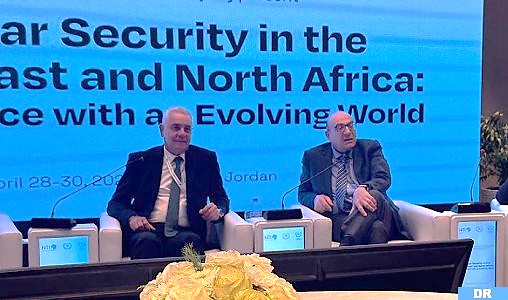
– On the sidelines of the high-level international workshop on nuclear security, held from April 28 to 30 in Amman, Jordan, Mr. Saïd Mouline, Director General of the Moroccan Agency for Nuclear and Radiological Safety and Security (AMSSNuR), called for coordinated national and regional strategies to confront the rapidly evolving threats posed by nuclear and radiological risks in an increasingly technology-driven world.

In his address, Mr. Saïd Mouline highlighted the emergence of major challenges, including those related to artificial intelligence, cybersecurity, and the rapid expansion of civil nuclear programs—particularly in the MENA region. He emphasized the need for enhanced regional cooperation, grounded in open dialogue, mutual trust, and support for the International Atomic Energy Agency’s (IAEA) programs.

Mr. Saïd Mouline underscored Morocco’s ongoing efforts, through AMSSNuR, to establish a robust regulatory infrastructure, supported by an Integrated Nuclear Security Support Plan (INSSP) developed in collaboration with the IAEA. This approach is driven by a strategic vision focused on capacity building and the sustainability of national expertise.

He reaffirmed Morocco’s strong commitment to global nuclear security, noting key milestones such as AMSSNuR’s designation by the IAEA as the first Regional Centre  for nuclear security infrastructure in Africa, Morocco’s active participation in the Nuclear Security Summits, and the organization of the 3rd International Conference of Regulators in 2019.

Mr. Saïd Mouline concluded by commending the organization of this workshop—a joint effort by the Jordan Atomic Energy Commission, the Nuclear Threat Initiative (NTI), and the IAEA—which he described as a strategic platform for anticipating emerging threats and enhancing collective resilience across MENA countries.