



Vienna: Morocco Chairs 11th Plenary Meeting of the Global Network for Nuclear Safety and Security
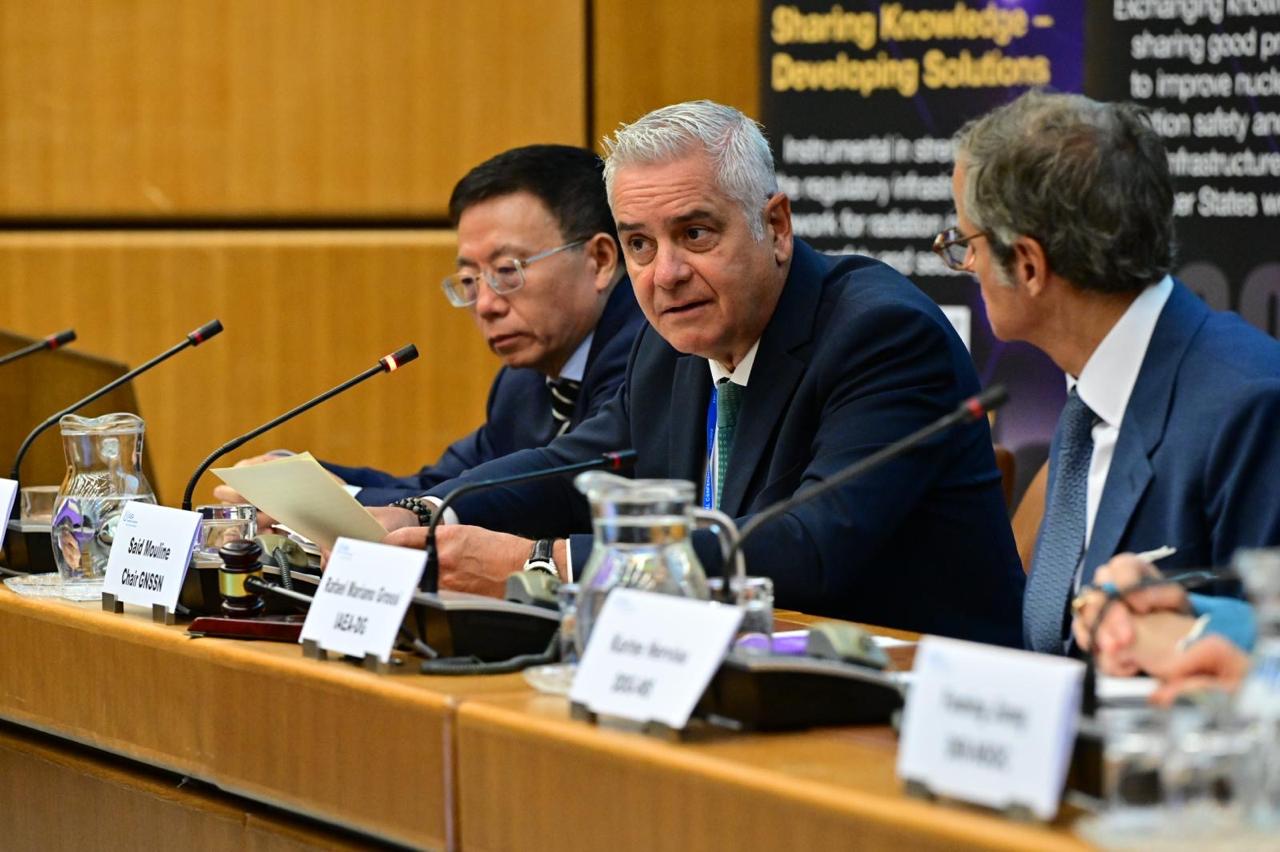
Vienna – Friday, 19 September – The Global Nuclear Safety and Security Network (GNSSN) held its 11th plenary meeting in Vienna, under the chairmanship of the Director General of the Moroccan Agency for Nuclear and Radiological Safety and Security (AMSSNuR), Saïd Mouline.
Speaking at the opening of the meeting, held on the sidelines of the 69th General Conference of the International Atomic Energy Agency (IAEA), which took place from 15 to 19 September, Mr. Mouline stressed the importance of GNSSN as a unique platform for cooperation, experience sharing and capacity building in the service of IAEA Member States.
He also stressed the need to join efforts in the face of common challenges in order to further develop the capacities of the authorities to be independent and strict in complying with regulations, while facilitating the deployment of activities and facilities using ionizing radiation.
The meeting, which was attended by IAEA Director General Rafael Mariano Grossi, focused on topical issues, such as the development of small modular reactors, emergency preparedness and response, the integration of cybersecurity and artificial intelligence into regulatory frameworks, as well as the promotion of diversity and inclusion through initiatives such as “Women in Nuclear”.
Participants also highlighted progress in capacity building, including the provision of self-assessment tools, the development of academic curricula and the holding of nuclear and radiological leadership schools.
The meeting allowed the various regional and thematic networks to present their achievements, testifying to the vitality of GNSSN. From Africa to Latin America, Asia to Europe, the Caribbean and the OSI Forum, each network has contributed through its initiatives to strengthening nuclear and radiological safety and security on a global scale.
Closing the meeting, Mr. Mouline welcomed the commitment of the delegations, recalling that nuclear and radiological safety and security are global public goods requiring enhanced international solidarity.
The adoption of the 2025–2026 Action Plan marks a new milestone for GNSSN, confirming its central role in networking expertise and supporting Member States towards a safer, more secure and more sustainable nuclear future.
By consolidating its leadership role within this global platform, AMSSNuR confirms its position as a key player, contributing not only to the influence of the Kingdom of Morocco, but also to the strengthening of nuclear safety and security internationally.