



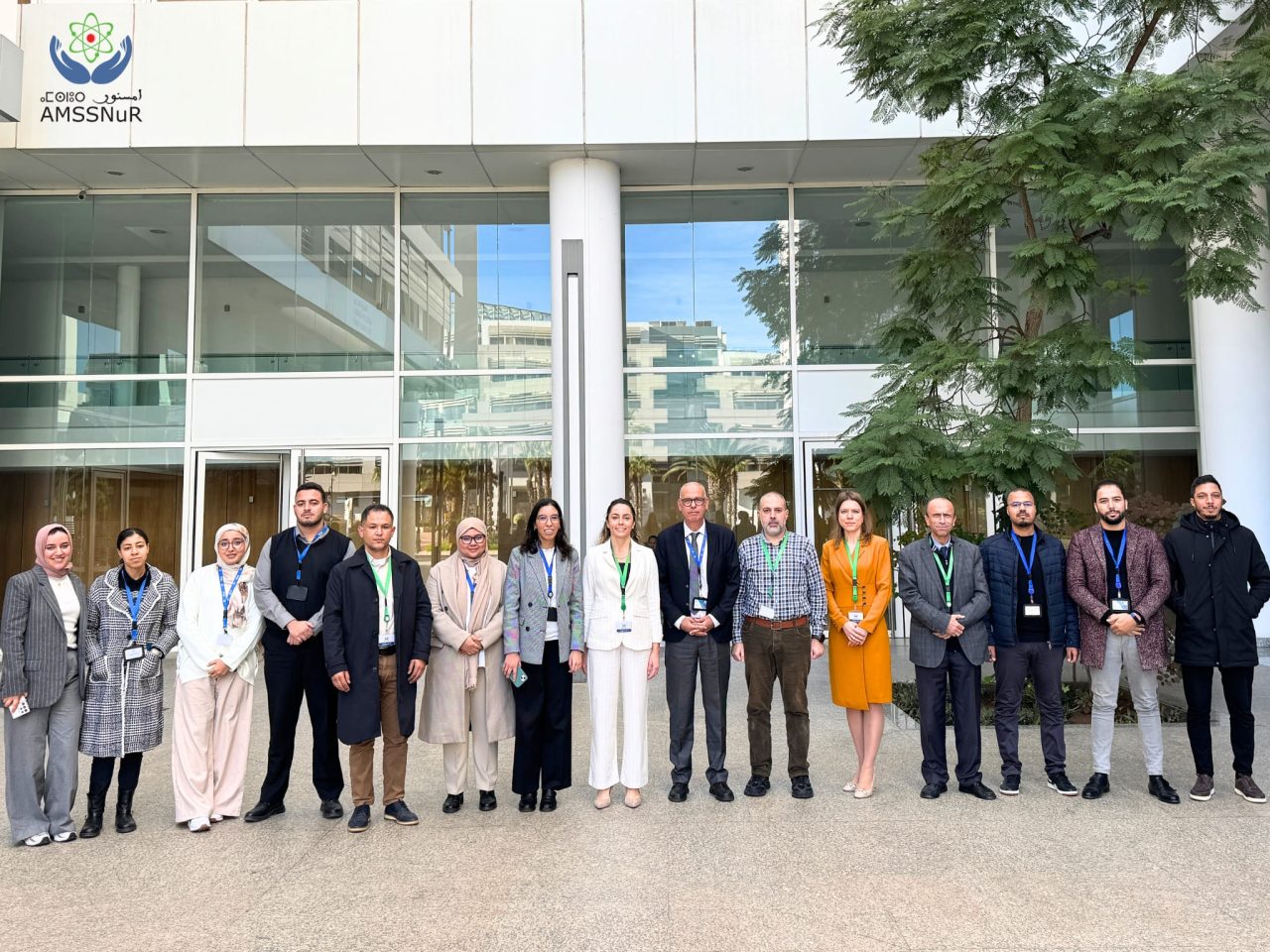
The Moroccan Agency for Nuclear and Radiological Safety and Security (AMSSNuR) organized a national workshop in Rabat from 8 to 12 December 2025, dedicated to assessing the environmental impact of artificial radionuclides and naturally occurring radioactive materials, commonly referred to as NORM (Naturally Occurring Radioactive Materials).
This event was held within the framework of the sustained technical cooperation between the Kingdom of Morocco and the International Atomic Energy Agency (IAEA). It reflects AMSSNuR’s determination to strengthen the national nuclear and radiological safety infrastructure on a lasting basis, in full alignment with international standards and best practices.
Led by high-level experts from the IAEA, the workshop brought together representatives from the main national institutions involved in the management, monitoring, and regulation of sources of ionizing radiation. Researchers, regulators, technicians, and public decision-makers were invited to pool their expertise around a shared objective: enhancing the reliability of radiological and environmental impact assessments while strengthening the protection of populations and ecosystems.
Key discussions focused on methodologies for assessing radiological impacts on the environment, the use of data derived from environmental radioactivity monitoring, and approaches to accurately estimate doses received by members of the public. These issues are particularly significant in a context where certain industrial, mining, or medical activities may involve the use of artificial radionuclides or the presence of NORM.
The workshop also featured an in-depth presentation of the IAEA’s reference publications on environmental impact assessment and public dose calculations. These documents constitute essential normative tools for regulatory authorities and operators, providing internationally harmonized and proven methodological frameworks.
Beyond the theoretical dimension, case studies and practical sessions played a central role. Participants worked on concrete scenarios involving facilities or activities using artificial radionuclides or naturally occurring radioactive materials. These exercises aimed to strengthen operational skills and promote effective ownership of radiological environmental impact assessment tools.
Through this dynamic of cooperation and capacity building, AMSSNuR reaffirms its commitment to responsible radiological risk management, placing the protection of public health and the environment at the heart of its strategic priorities. A strong signal commensurate with the current and future challenges associated with the safe and peaceful use of nuclear and radiological technologies.